

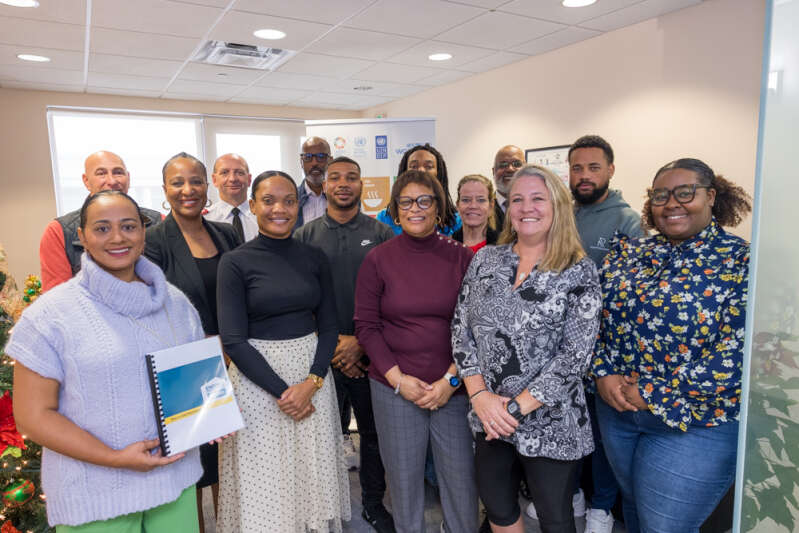
Causes of homelessness were analysed on Tuesday night during a meeting to tackle the burning issue, while individuals who once suffered homelessness shared their stories.
The Plan to End Homelessness Advisory Panel and Steering Committee held its first meeting with the aim of defining the problem at hand and looking at how people become homeless.
The meeting was one of four planned and will result in a draft plan to end homelessness in Bermuda.
Denise Carey, the director of the charity Home, said: “I must emphasise that it’s not only about persons who are homeless right now, but persons who are also on a pathway to homelessness.
“That is how we as a community will move from that emergency last-minute housing to being able to predict when someone is in a situation that is more likely than not to end in homelessness.”
Ms Carey said that a person’s home had to be physically sound, provide privacy and independence, and be considered legally theirs to be considered a home.
She said that because of this, homelessness could be classified into roofless, which included sleeping rough; houseless, such as those in temporary shelters; housing insecure, which includes people facing eviction or the threat of violence; and housing inadequate, such as those without electricity or running water.
She added that different factors are at play, such as immigration status, domestic violence, poverty and mental health.
Ms Carey said that those who suffered from poverty were less likely to seek the help they needed, particularly medical assistance.
She added that this had the knock-on effect of making a person withdraw from social circles that could offer support and lead to a struggle to hold employment that would help to keep them afloat.
Ms Carey said that it is more difficult to pull out of poverty than might be initially thought and pointed out that the average cost of living could fall anywhere from $3,794 to $5,494 a month.
She explained that, for context, a person would have to save the wages from working 335 hours a month under the present minimum wage of $16.40 — nearly 12 hours of work every day — just to lift themselves out of poverty.
She added that this did not include the work needed to maintain one’s housing status and health.
Ms Carey said: “I couldn’t do all that, and I go to sleep in a bed.”
She added: “This is the impossible climb that our community has, and so when someone calls me to say somebody’s mad because someone’s outside their property, you’re not as mad as them.
“When you’re thinking ‘why don’t they just’, I need you to run through all of this in your mind so you can see how hard it is to ‘just’.”
Ms Carey said that because of the factors that generate homelessness and the pitfalls that prevent people from leaving it, homelessness was “a policy choice” rather than “a personal choice”.
She said: “What about this is attractive, where someone is saying ‘yeah, I want to be a part of this team’?
“It’s impossible, and that’s why we’re here.
“We’re here to not only say ‘people have the right to housing’, we need to have a deep understanding of why people are outside and why they are so frustrated.”
The next session of the community consultation will be held on February 6 at the Chamber of Commerce on Front Street at 6pm.
It will give an overview of the plan to end homelessness.
Read the original article at The Royal Gazette